It’s hard to remember what it was like pre-Covid-19, when we could walk around without wearing a face mask, go to the pub (and sit inside!), visit the shops on a mission to buy something beautiful and excessive, or jump on an aeroplane to a far-away tropical place. Whatever the future holds, and however we emerge out of this pandemic, what we do know, is the luxury landscape has changed.
What’s happened? Throughout 2020, the luxury industry shrank on a scale not seen before, around 22% (Bain&Co. 2021), and now sits at €1 trillion (2015 levels).
Airplane is arriving at a tropical resort pre-Covid-19
Pre Covid-19. We talked about luxury experiences. Everything was centred on hospitality and travel, along with experienced based goods, such as luxury cars, private jets and yachts. All of these have been devastated by the pandemic, with luxury travel declining by 80% (McKinsey 2020). Globally, China has been the only region to fare well and grew at 45%, while Europe slumped by 36% due to the collapse in tourism. However, by the end of 2021 the luxury goods market is expected to recover 50% of the profit lost during 2020, and will recover to 2019 levels by 2023 (Bain&Co. 2021).
So, where do we see the future of luxury?
Online. In the luxury market, online sales made up €49 billion in 2020, up from €33 billion in 2019. The share of purchases made online nearly doubled from 12% in 2019 to 23% in 2020. By 2025 online will take over the main channel for luxury consumption.
Omnichannel. The distribution of physical luxury stores is going to change. Luxury brands will need to streamline their distribution of physical stores, and develop ways of maximising customer experience, consistently, across online and instore.
Second hand. In luxury, we speak of timelessness, and quality, and this is the reason why – luxury has to last. With the Millennial mindset comes sustainability and ethics. In line with this, is recycling, upcycling and repurposing. In 2020, second hand luxury goods sales rose by 9% to €28 billion. Luxury brands will need to consider how they control resale of their luxury goods in-house. Can luxury brands consider renting out their best sellers as an extension of their core business?
Sustainable, ethical, transparency. Luxury brands will need to re-evaluate and redefine the purpose of its brand, instigated by the impact of the pandemic. Luxury brands will move to producing more durable and higher-quality products, commit to valuing employees, make its supply chain fully transparent and traceable, maximize its environmental and social commitments, and create economic value from sustainability.
Younger generations. Generations Y and Z will continue to take over as the key consumers of luxury, and will represent around 65% of global purchases by 2025.
China. Chinese consumers are expected to dominate global luxury consumption, growing to represent over 45% of global purchases by 2025. Consideration will be required over how to enter into the China mainland market, and sustain interest from local consumers.
Environment concerns drive the new era of sustainable luxury goods and ethical consumption
As the luxury consumer continues to shift from the traditional middle / upper class and high net worth individuals to Millennials and Gen Z, modern affluent consumers are increasingly looking towards wellness as the ultimate status and personal success symbol. Millennials are forging the growth of the luxury wellness sector in a quest to seek the ultimate combination in holistic health and lifestyle.
What Does Luxury Wellness Mean?
Wellness as a concept has been evolving over the last few years, and covers a multitude of sectors across a variety of industries. The concept of wellness is considered “a state of complete physical, mental, and social well-being, and not merely the absence of disease or infirmity”, according to The World Health Organization. In other words, it is the optimal and holistic state of well-being, which seeks to satisfy the mind, body and spirit. According to The Global Wellness Institute (GWI), the definition of wellness is described as “the active pursuit of activities, choices, and lifestyles that lead to a state of holistic health.”
The global wellness industry today is valued at $4.2 trillion, made up of key sectors including personal care and beauty, healthy eating, wellness tourism, fitness, complementary / personalised and preventative medicine, spas, wellness life-style realestate and workplace wellness (according to the Global Wellness Institute, 2018).
Luxury Wellness considers a variety of aspects involved in creating a holistic state of well-being and those elements involved in realising the optimum healthy lifestyle as a lifelong pursuit. It is the desire to live the optimum healthy lifestyle through luxury choices and experiences.
Luxury Brands in Wellness.
Today social media drives the campaign for luxury wellbeing, with ambassadors of health and fitness products displaying enticing images capturing the eye of young luxury consumers in pursuit of achieving the optimum healthy lifestyle. The success of today’s luxury brands means fulfilling the consumers well-being desires and capturing their dreams across all industry sectors. It also means that luxury brands must reconsider their market positioning and marketing campaigns.
With ethics and sustainability also at the forefront of the consumer’s mind, luxury brands must consider share-worthy experiences which involve a holistic approach to luxury health and well-being, which includes considerations to the environment. New luxury marketing approaches, therefore, need to appeal to modern affluent consumers and their new ideals and values in luxury living.
The Luxury Wellness Categories.
Luxury wellness generally falls into four categories: Beauty, Fashion, Fitness & Travel.
Modern affluent consumers are inspired to live healthier and take sensible life choices due to advances in medicine, vast communication through social media, and technology such as fitness trackers and interactive home training classes. With environmental issues working hand in hand with luxury consumer ideals, brands are being pressured to move towards organic beauty products free from chemicals and animal testing, sustainability in fitness clothing manufacture, and the interior of fitness clubs and cafes emulating natural green spaces. Luxury travel is also redefining itself as wellness retreats in calm open picturesque spaces offering holistic health and wellbeing experiences.
Beauty.
The global beauty market is still the strongest growing wellness sector. Luxury beauty brands are tapping in on consumer desires for healthy-ageing and ‘clean’ products free from chemicals. Vegan beauty products are also appearing in the product portfolio of well-known cosmetic brands, appealing to the health-conscious modern luxury consumer.
Skin care and colour cosmetics drive the beauty sector, owing to the consumer desire to age healthily, social expectations on a modern ‘look’, and to social media for creating opportunities for self-expression (selfies) and online makeup tutorials.
Instagram images and Vlogging on YouTube seem to be the key to cosmetic and skin care brand success by defining the wellness luxury dream through digital storytelling. Beauty brands also need to be seen cross collaborating with fitness brands and creating make up suitable for gym activities. Athleisure beauty is the next growing category in beauty, with light-weight products fit to be worn for exercising and clean products used post workout. With workout selfies flooding social media, beauty brands can jump on this opportunity for product exposure.
Of course, beauty products are not just limited to the external appearance, consumers are now seeking solutions from within. Part of the holistic approach to wellness includes consumable products which deliver health benefits internally. We now see beauty supplements to superfood and collagen inner beauty powders available which promise beauty benefits such as weight loss, clearer skin, and stronger hair.
In recent years, sport and fashion have collided and created a new category which is growing faster than any other fashion category:activewear. The global activewear market is expected to reach nearly $547 billion by 2024, according to Allied Market Research. This represents an average annual growth rate of 6.5 percent between 2018 and 2024, versus just 4 percent for the overall fashion industry and 4.5 percent for luxury fashion in particular.
Also known as athleisure (a portmanteau of ‘athletic’ and ‘leisure’), the high end activewear category, can be defined as casual clothing designed to be worn both for exercising and general use. Athleisure now includes clothes associated with yoga, jogging, as well as tank tops, underwear, and casual hoodies. The items are considered for everyday wear rather than just for sport or in the gym.
Celebrities on social media have enhanced the athleisure sector, uploading images of outfits and healthy experiences onto Instagram. Sharing active lifestyle choices on social media has become the modern trend.
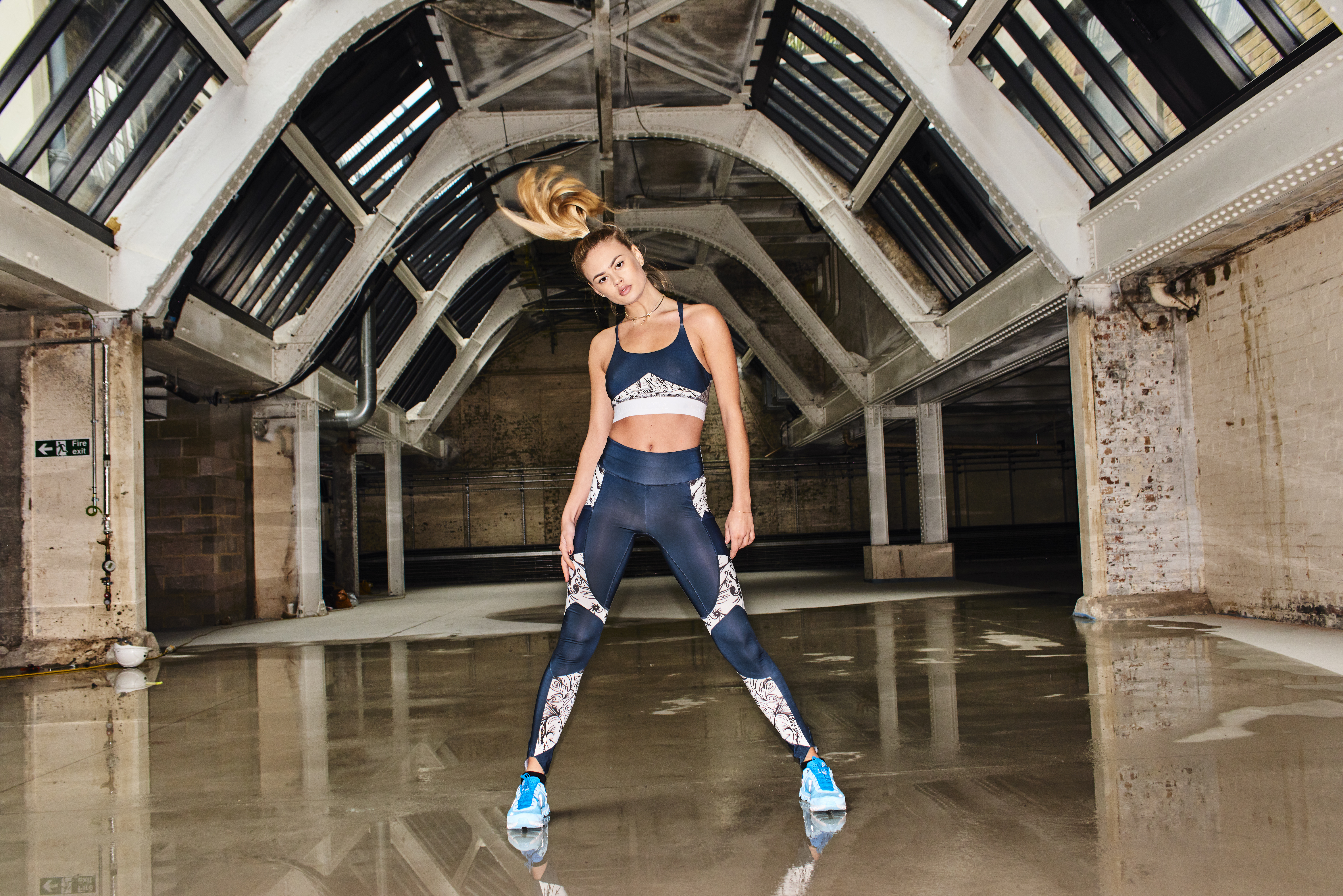
League Collective Multi-purpose Leggings
Fitness.
The fitness category now seems to stretch between high priced gyms, technology driven virtual workouts, and the other end of the spectrum of budget pay as you go gyms. With luxury consumer expectations of personalised experience, with bettering themselves, online virtual personal trainers and convenience, the luxury fitness industry is tapping into virtual workouts, non-committal class subscriptions, connected technology and wearable devices, apps with digital coaches, wellness spaces, virtual reality gamification, and exclusive boutique fitness studios.
Fitfluencers express their healthy fit lifestyle choices on social media and are consistently Instagram-ready. Social media has become the go-to source for fitness inspiration and motivation.
Equinox Fitness Club in Huntington Beach CA USA
Travel.
Wellness travel promotes your health and wellbeing, both physical and mental, through activities that you do during your trip. … With the growing trend for staying healthy while you travel, you can make your entire trip an adventure to feeling better in both body and mind. According to the Wellness Tourism Association,wellness travel isTravel that allows the traveller to maintain, enhance or kick-start a healthy lifestyle, and support or increase one’s sense of wellbeing.
A primary wellness traveller is someone who makes wellness the primary purpose of their travels. It is noted that primary wellness travellers are willing to spend more on a holiday experience than other travellers.
Wellness tourism grew at a rate of 6.5 percent every year since 2015, twice as fast as the tourism industry as a whole (3.2%) and the global wellness tourism sector was valued around $680 billion in 2018. It is the fastest growing sector in travel today (Wellness Economy Monitor, by the Global Wellness Institute, October 2018).
Luxury travel is now more than an experiential holiday, taking a wellness holiday has now evolved into transformative travel. This is a travel experience that empowers people to undergo some self-reflection and make meaningful, lasting changes in their lives — has become a prominent demand from today’s high-end travellers. Luxury travellers are demanding transformative experiences that foster emotional, life-changing wellness journeys.
Not only are travellers looking for mind and spiritual transformations, they also seek fitness breaks to boost body health whilst on holiday. Fitness retreats and fitness tourism is a growing sector in luxury wellness. Another part of transformative travel involves digital detox, where experiences offer a ‘no technology’ break in order to disconnect from society.
What is more, luxury wellness travellers now seek an ultimate holistic experience which incorporate healthy eating, community wellness, and sustainable practices. Travellers want fresh low-calorie food options, even vegan and vegetarian to experiment in their diets. Farm-to-table is high priority at wellbeing retreats, which is seen to be the luxury sustainable way of supporting the environment and the local community.
Achieving the unachievable is also part of this sector. Paying extortionate amounts of money to fulfil an extreme challenge or unusual experience is the ultimate goal for some wellness travellers. This goes hand in hand with personalised luxury experiences and achieving one’s personal best, two of the most sought-after aspirations for the modern luxury consumer. All ready to post on social media for an Insta-high five.
The Retreat, Costa Rica
What does this mean for luxury brands?
Luxury brands should consider how they may incorporate the wellness ethos in their offering.
Brands need to express their ethical and sustainable practices in their products and services.
Brands must understand the modern affluent consumer and communicate in authentic ways which resonates with their desires for a holistic healthy lifestyle.





 Coney Luxury