
Dr Debbie Coney
I’ve long been fascinated by the emotional, cultural, and symbolic power of luxury spaces—from the stillness of a high-end boutique to the transience of an airport terminal. My doctoral work explored the airport as a luxury space, where shopping becomes fleeting, ritualised, liminal, and laden with meaning. That research sparked an enduring interest in how luxury is shaped not just by what we buy, but where, how, and when we encounter it.
Over time, my research has extended further into the world of temporary luxury spaces—those designed to exist only briefly but leave lasting impressions. This piece explores how these ephemeral formats—from pop-ups to immersive brand installations—are transforming the way luxury is defined, delivered, and experienced in today’s culture of immediacy.
Why Ephemerality Matters
Luxury has long been anchored in permanence: flagship stores, heritage buildings, and legacy ateliers. But in a saturated, hyper-connected landscape, what’s fleeting now holds prestige. Ephemeral retail spaces—temporary, highly curated environments—are no longer just experimental. They’ve become strategic tools for brands seeking to create symbolic scarcity and spatial storytelling.
They’re not simply about selling product. They’re about staging myth.
Case Study: Jacquemus – The 24/24 Boutique
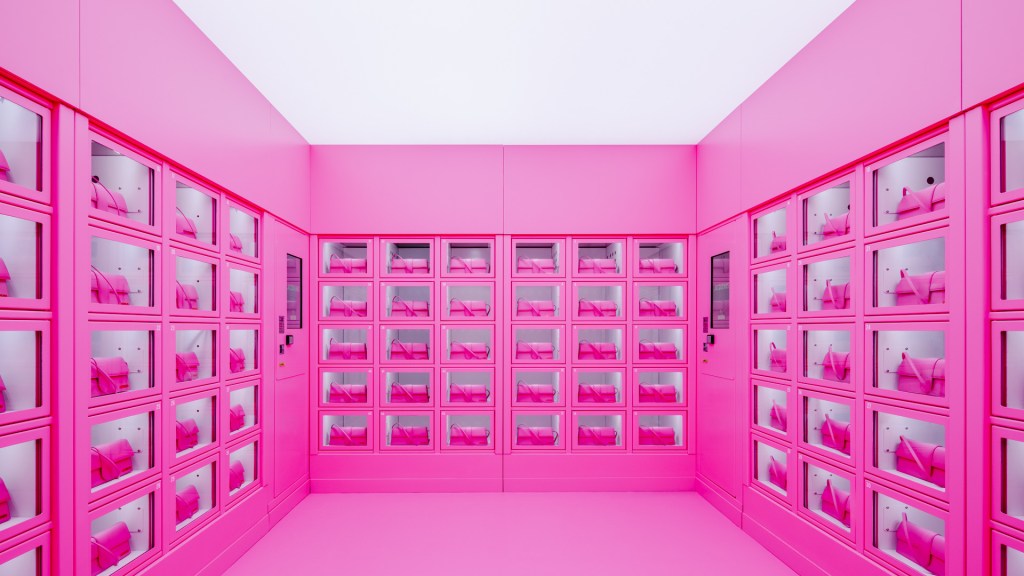
In Paris, Milan, and London, Jacquemus’ 24/24 pop-up boutiques appeared as vending-machine-style installations—open 24 hours a day, but only for three days. These pastel-toned micro-boutiques featured minimal human interaction, limited inventory, and high shareability.
What fascinated me was the way Jacquemus used absence as a form of luxury. No staff. No furniture. Just product, light, and atmosphere. The interaction became the experience. The scarcity was spatial and temporal—not just about stock, but about timing.
It was a perfect example of ritual without permanence, and proof that luxury doesn’t need four walls and a lease to leave an impact.
Case Study: Louis Vuitton x Takashi Murakami (2025)
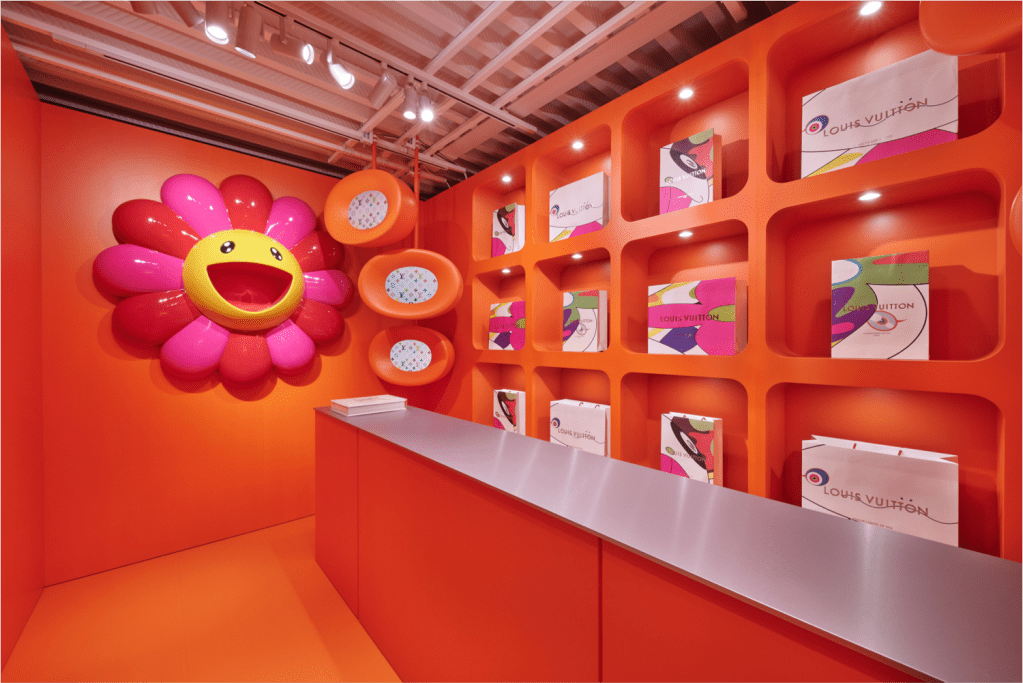
Two decades after their original collaboration, Louis Vuitton and Takashi Murakami launched a global pop-up tour, with Tokyo’s Harajuku district as its anchor. The space fused high fashion and pop culture: gacha machines, limited-run products, an animated short film, and a Murakami-branded café.
What stood out wasn’t just the volume of content—it was the precision of cultural placement. The space referenced capsule hotels, vending culture, and anime storytelling, making it not just a retail site but a cultural activation.
This was ephemeral luxury at its most sophisticated: immersive, playful, and hyper-contextual.

What Ephemeral Spaces Offer Luxury Brands
Through this continued line of research, I’ve come to understand ephemeral retail as more than just a marketing tactic. These spaces serve multiple strategic and symbolic functions:
Cultural Localisation – connecting global brands with local stories
Symbolic Scarcity – creating more desire by limiting time
Retail as Performance – turning shopping into an entertaining experience
High Return on Experience (ROX) – getting the most effect with the least effort
Social Amplification – designed to go viral, not just attract visitors
These activations allow brands to remain agile, relevant, and emotionally resonant—especially with younger, experience-driven audiences who value moments over materials.
Final Thoughts
The spaces we shop in are never neutral. They shape emotion, memory, and meaning—especially in luxury. Today, we’re seeing a shift: from the permanence of prestige to the luxury of the moment.
Ephemeral spaces are not a departure from luxury’s DNA. They’re an evolution—rooted in narrative, exclusivity, and immersion. In an era that often equates value with endurance, luxury’s power may lie in being intentionally fleeting—but able to leave a memorable moment.
 Coney Luxury