
In an era of economic volatility, cultural introspection, and rapid digital change, a quieter form of luxury is gaining prominence. Once a niche aesthetic reserved for insiders, silent luxury has become a powerful cultural and commercial force—defined by discretion, restraint, heritage craftsmanship, and ethical integrity.
My recent investigation into the evolution of silent luxury explores how this subtle, logo-free approach is reshaping brand strategies and consumer expectations. Drawing on case studies including The Row, Gabriela Hearst, and Old Céline, the analysis reveals that silent luxury is not simply about muted design, but a broader ideological shift towards authenticity, sustainability, and identity-based consumption.
Rosie Huntington-Whiteley, captured on British Vogue, wearing the stomper boot.

What Defines Silent Luxury Today?
Silent luxury reflects a generational rejection of ostentation. Modern luxury consumers—particularly Gen Z and Millennials, who are set to dominate luxury spending by 2030—seek brands that align with their values. They demand purpose, emotional resonance, and discretion. Logo-free garments, muted palettes, and minimalist silhouettes have become new indicators of status, where cultural capital replaces conspicuous wealth.
As Bourdieu’s theory of distinction suggests, cultural literacy and taste are the new signifiers of status. Silent luxury appeals to those who wish to communicate “insider knowledge” rather than loud recognition. Brands like The Row, with their no-logo policy and timeless tailoring, turn understatement into aspiration.
Strategic Responses: Case Studies in Practice
- The Row adopts silent marketing by foregoing advertising and embracing scarcity. It communicates excellence through elevated materials, selective distribution, and an intimate, tactile retail experience.
- Gabriela Hearst embodies sustainability-led silent luxury, using deadstock fabrics, ethical partnerships, and innovation to build a quiet, responsible brand.
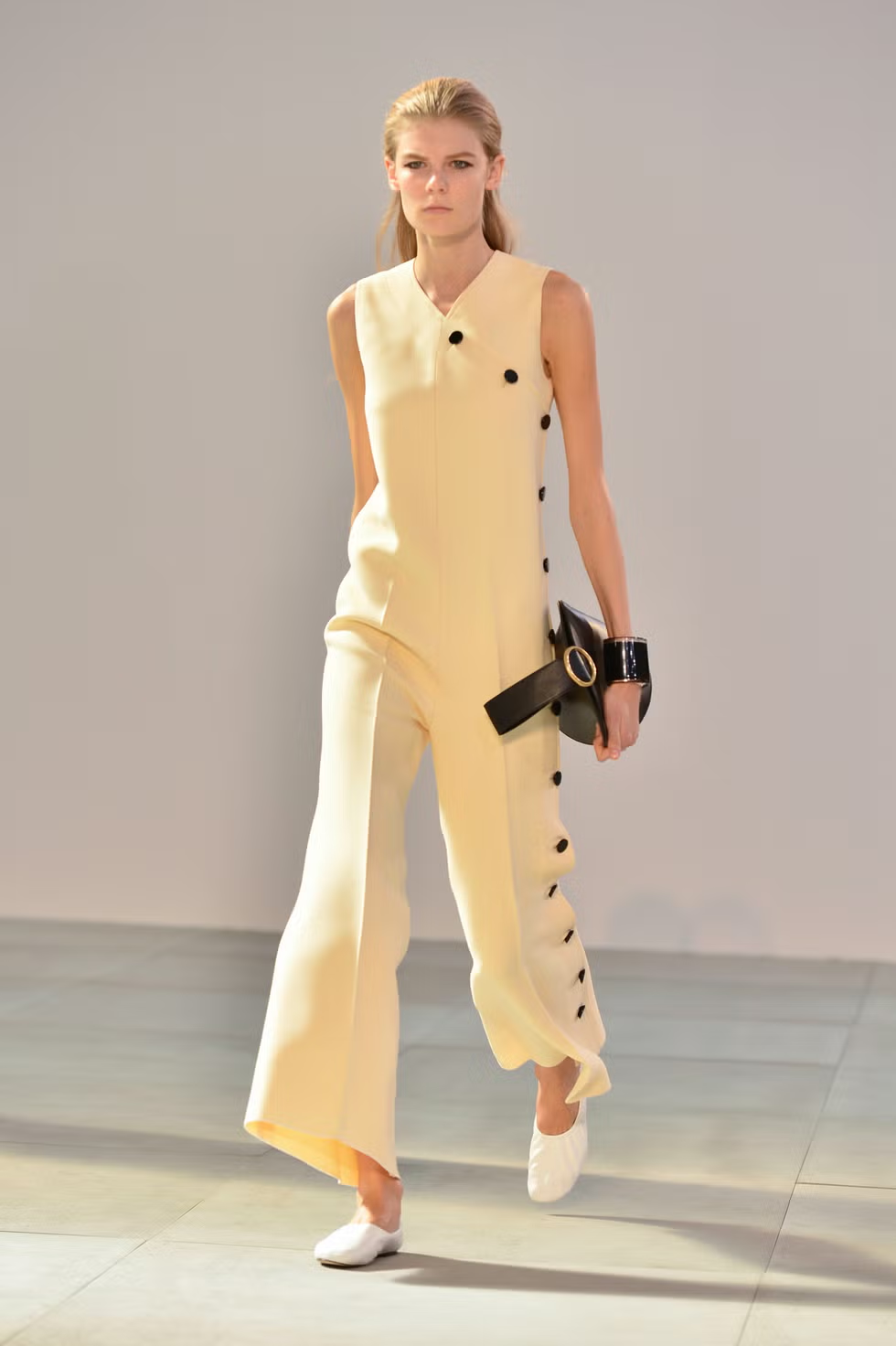
- Old Céline, under Phoebe Philo, cultivated a cult following through intellectual minimalism. Today, her pieces hold resale value, proving that discretion creates long-term cultural equity.
STEPHANE CARDINALE – CORBIS//GETTY IMAGES
The Silent Luxury Strategy Mapping Framework
The research led to the creation of a strategic framework based on four pillars:
- Minimalist Expression
- Ethical Depth
- Cultural Signalling
- Selective Availability
Brands that perform strongly in two or three of these areas tend to achieve authenticity and long-term appeal. Overextension across all four often results in dilution. Silent luxury thrives on coherence, not coverage.
The Road Ahead
Silent luxury is not the only future of luxury, but its rise reflects powerful cultural drivers that are here to stay: authenticity, sustainability, cultural capital, and emotional value. Brands that wish to remain relevant must act deliberately. Whether they embrace silence or not, future luxury will be defined not by volume or spectacle, but by meaning, restraint, and trust.
To survive the shifting tides of modern consumption, brands must ask: What do we stand for? And can we express that—quietly?
 Coney Luxury